
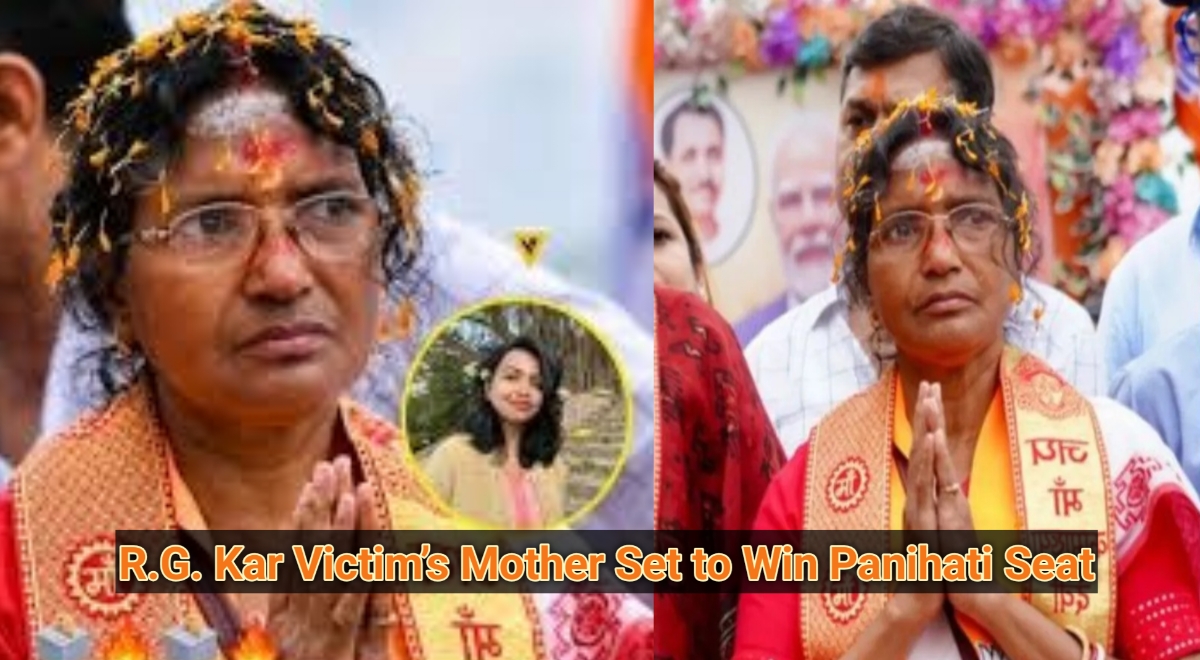
Bhubaneswar (Special Correspondent, The Fact Bureau): In a development that is being closely watched across the country, Ratna Debnath, mother of the R.G. Kar victim, has taken a significant lead from the Panihati Assembly constituency in West Bengal, turning her electoral debut into a moment of national resonance.
As per data released by the Election Commission of India during the eighth round of counting, Debnath is ahead by over 20,000 votes (over 100000 vote if seen unofficially) against Tirthankar Ghosh of the All India Trinamool Congress. The trend comes at a time when the Bharatiya Janata Party is leading in more than 190 of the state’s 294 seats.
What makes Debnath’s lead particularly significant is not just the electoral arithmetic, but the larger message it carries. Her entry into politics came nearly 20 months after the brutal rape and murder of her medico daughter in the R.G. Kar case- an incident that had sparked outrage and protests across the country. By stepping into the electoral arena, Debnath transformed personal grief into a public demand for accountability.
Panihati, Traditionally, Considered A Stronghold Of TMC
Panihati, traditionally considered a stronghold of the ruling party, had been represented by senior leader Nirmal Ghosh for multiple terms. His son, Tirthankar Ghosh, is now trailing, marking a potential shift in voter sentiment in a constituency long seen as politically stable.
A Campaign With Resistance And Resilience
Debnath’s campaign was framed by the BJP as a fight for justice and women’s safety, positioning her as more than just a candidate. Party leaders described her as a voice for countless women seeking accountability, while her rallies echoed slogans demanding justice. Her symbolic messaging, including campaign appearances that highlighted resistance and resilience, drew national attention.
At the same time, her candidature also triggered debate. Sections of civil society viewed the R.G. Kar movement as a non-partisan moral campaign and expressed concern over its political turn, while others defended her decision to contest as a democratic right and an extension of her fight for justice.
Controversies during the campaign, including allegations of remarks against Chief Minister Mamata Banerjee, added to the political intensity of the contest. However, the electoral narrative around Debnath has remained anchored in the larger issue of justice.
Women’s Safety Deeply Resonate With Voters
As counting progresses, her lead is being seen not merely as a constituency-level development but as a reflection of how deeply issues of women’s safety and justice resonate with voters. For many observers, this moment represents a rare convergence of personal tragedy, public sentiment, and democratic expression.
If the trend holds, Ratna Debnath’s victory would mark more than a political win- it would stand as a powerful national symbol of a mother’s pursuit of justice finding an echo in the ballot box.